

Adela Velarde Pérez: The Woman, the Nurse, the Myth Known as “La Adelita”

Updated: Sep 6, 2025
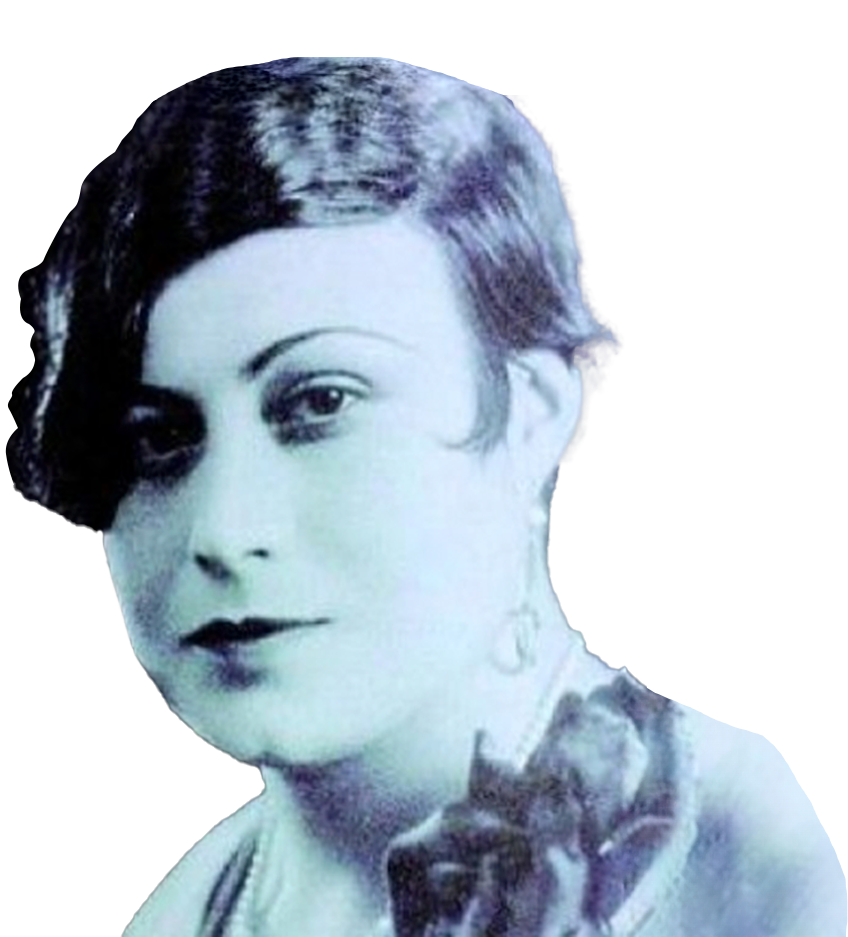
Adela Velarde Pérez, better known as La Adelita, is an iconic figure of the Mexican Revolution and one of the few women whose name has transcended generations and borders. She was born on September 8, 1900 (though some records list 1899) in Ciudad Juárez, Chihuahua, into a well-off and recognized family: daughter of lawyer Rafael Velarde and María de Jesús Pérez Samaniego, known as Jesusa.
Although she was baptized as Adelaida, her name appears as Adela in all known official documents. From a very young age, she showed a determined character and a strong interest in the medical field. At the age of 13, driven by patriotic and humanitarian fervor, she left her home without her parents' consent to join the Revolution. A year later, she was already part of the Constitutional White Cross, an organization founded by Leonor Villegas de Magnón—an activist and feminist journalist—dedicated to helping the wounded at the front lines. Adela specialized in caring for the dying, those who, amid the chaos of war, needed not only medical attention but human comfort.
The Sergeant, the Love, and the Corrido
In that context, she met the great love of her life: Sergeant Antonio Gil del Río Armenta, from the town of Plateros, Zacatecas. Tall, slim, with blue eyes and a cheerful personality—according to Adela’s own memories—Antonio was a young soldier who eventually became inseparable from her. He was also the author of the famous corrido “La Adelita,” a musical piece that has become one of the most representative anthems of the Mexican Revolution and has been sung far beyond the country’s borders.
The romance ended tragically during the Battle of Gómez Palacio, Durango, between March 22 and 26, 1914. Amid crossfire, a colonel asked for water. Antonio took Adela’s canteen and crossed the battlefield to deliver it—only to be gunned down by enemy bullets. That heroic and intimate act deeply marked Adela’s life. After his death, she uttered a phrase that still resonates as a testament of disillusionment: “They have made the Revolution something horrible.” It marked the end of her active participation in the cause.
The Myth and the Memory
The corrido “La Adelita” turned her personal story into a collective symbol. The name Adelita became synonymous with all the women who took part in the Revolution, without distinguishing between nurses, soldaderas, spies, or cooks. In that process, the original identity of Adela Velarde was diluted, as she was never an armed combatant, but a brave nurse on the most vulnerable frontlines of the conflict.
Other corridos, such as “La Valentina,” also helped highlight women’s participation. However, few achieved the cultural diffusion and permanence of “La Adelita,” a piece that has been reinterpreted in many contexts of struggle, resistance, and identity.
Between Recognition and Oblivion
After the Revolution, Adela moved to Mexico City, where she began working in 1929 as a typist in the Mexican Postal Service. Recognition for her role in the Revolution came late: on February 22, 1941, she was officially named a Veteran of the Revolution by the Secretariat of National Defense. Later, in 1958, she was accredited as a member of the Mexican Society of Military Studies, and in 1962, she was inducted into the Mexican Legion of Honor.
However, institutional recognition did not come with economic stability or social security. She died on September 4, 1971, in Mexico City. Today, she rests in a modest grave at the Dolores Civil Cemetery, far from the grand national monuments.
The Colonel, the Family, and the Legacy
One of the recurring figures in Adela’s story is Colonel Alfredo Villegas, born in 1890. He met Adela when he was 24 and she was only 14. Although at the time she was in love with Antonio, decades later—when he was widowed and retired in Del Rio, Texas—Colonel Villegas sought her out again. Through Lieutenant Colonel Arnulfo L. Torres, he managed to reconnect with her, and Adela ended up living with the colonel’s children and grandchildren, who remembered her as a loving grandmother.
Thanks to this family, documents, testimonies, and personal belongings of Adela Velarde have been recovered—materials that now form the basis of a developing museum project. The compilation of these archives has been made possible by the oral memories of her step-grandchildren—Velma, Judy, Alfredo III, and Óscar—who lived with her and have actively contributed to the vindication of her legacy.
Epilogue
The life of Adela Velarde Pérez is the portrait of a young woman who defied the expectations of her time, who crossed the boundaries of her social class to care for those most in need in the worst scenarios of war. Her story—beyond the corrido and the myth—is that of a real woman: brave, passionate, and often forgotten by official history. Recovering her story is an act of historical justice and a tribute to all the women whose voices are still waiting to be heard.


Comments